
Last updated November 22, 2026
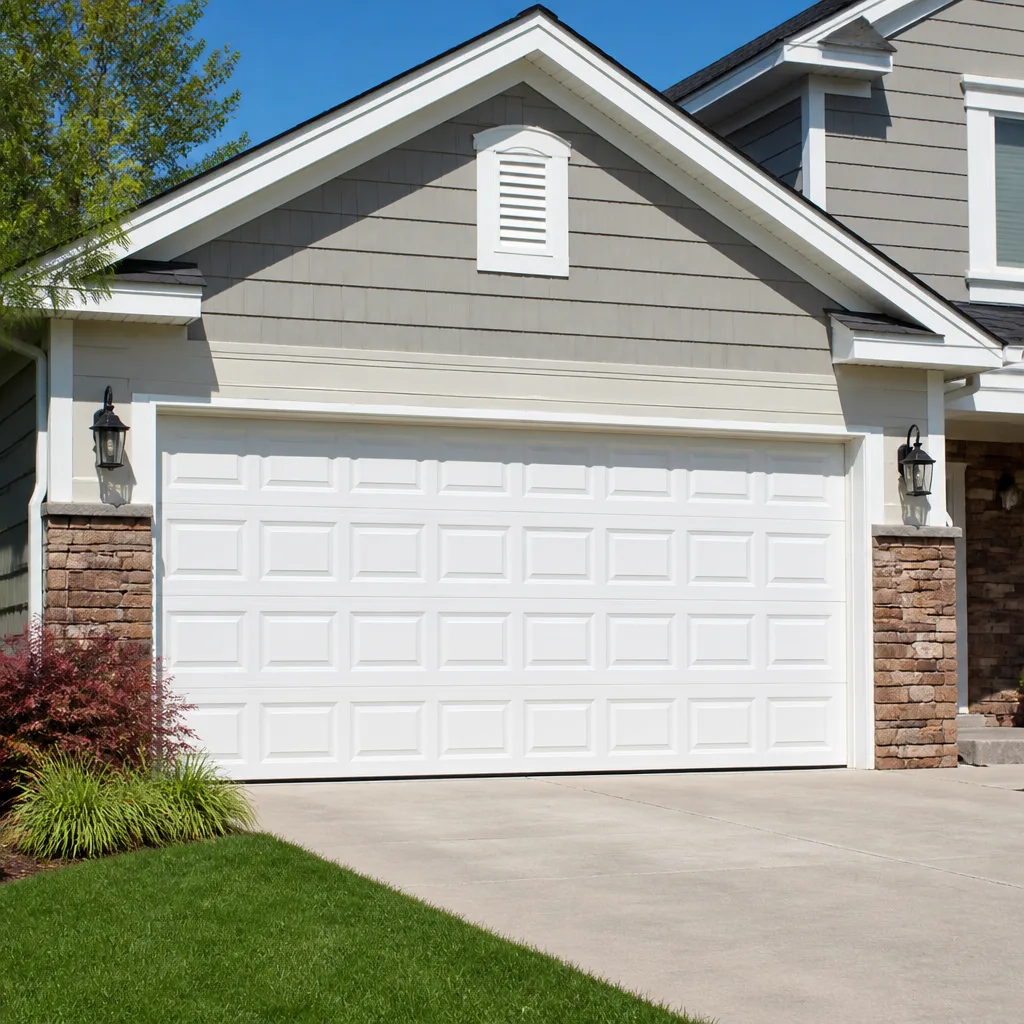 Raised-panel steel
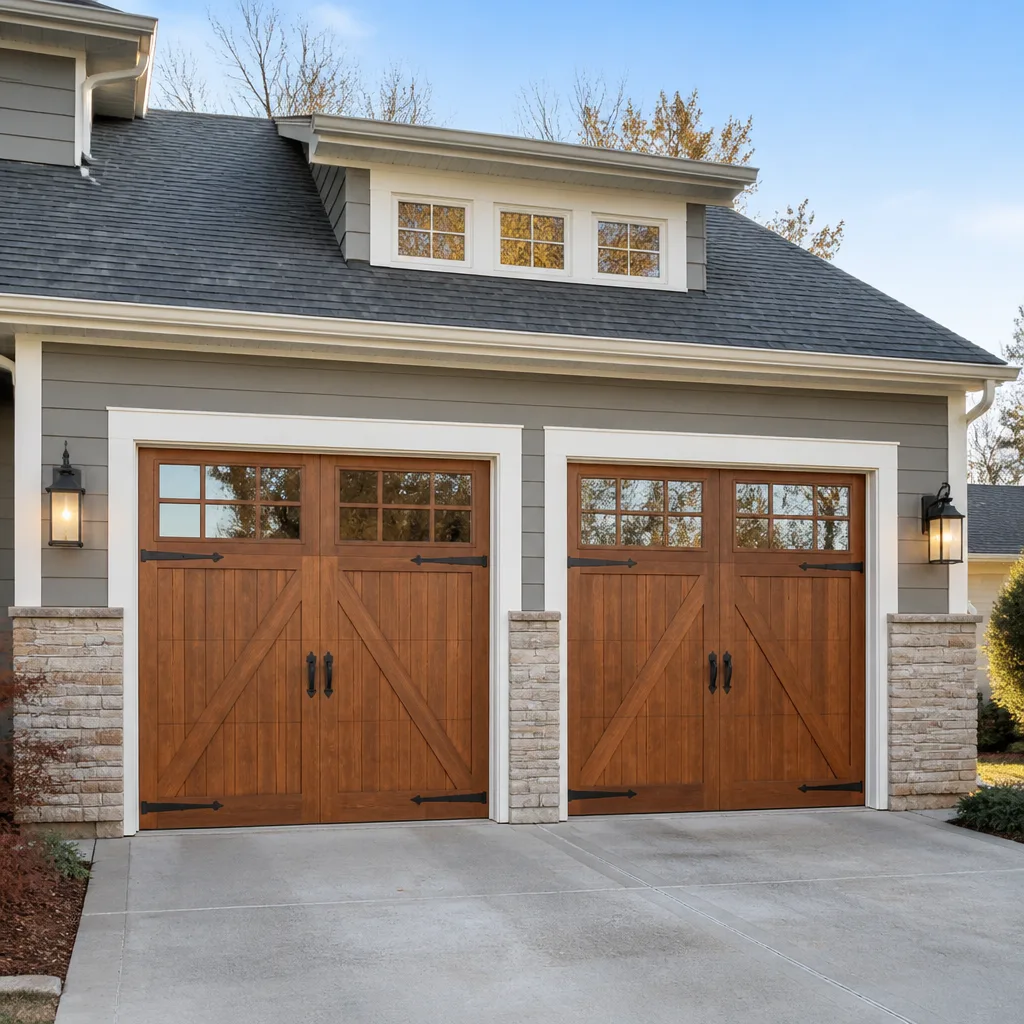 Carriage house
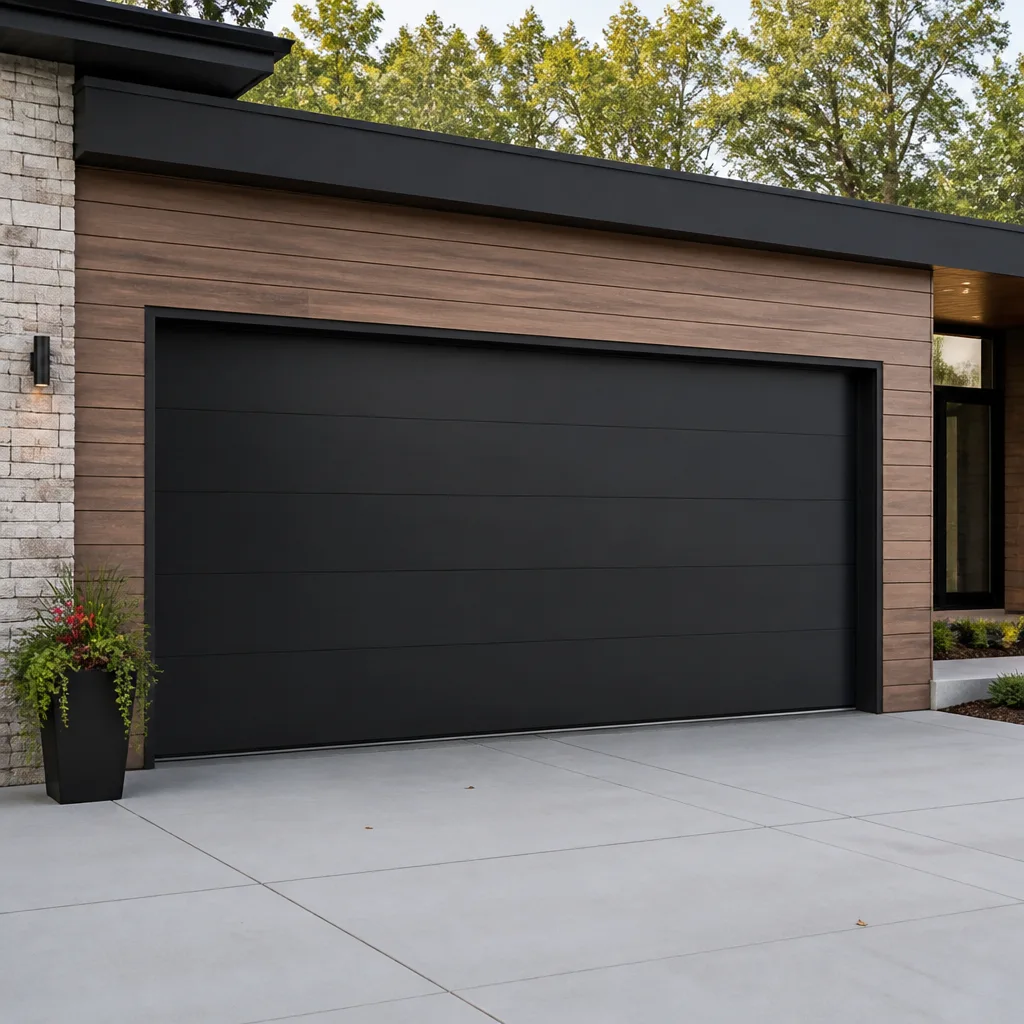 Modern flush
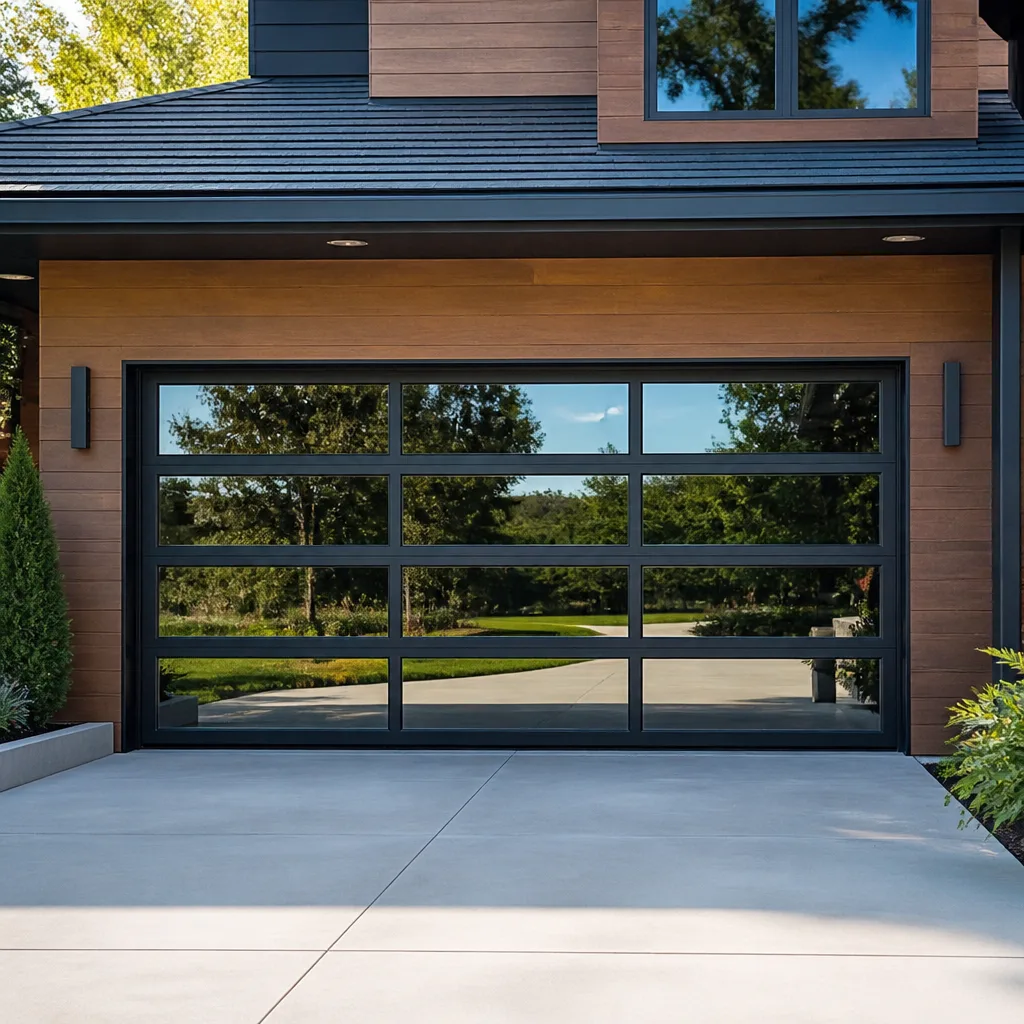 Full-view glass
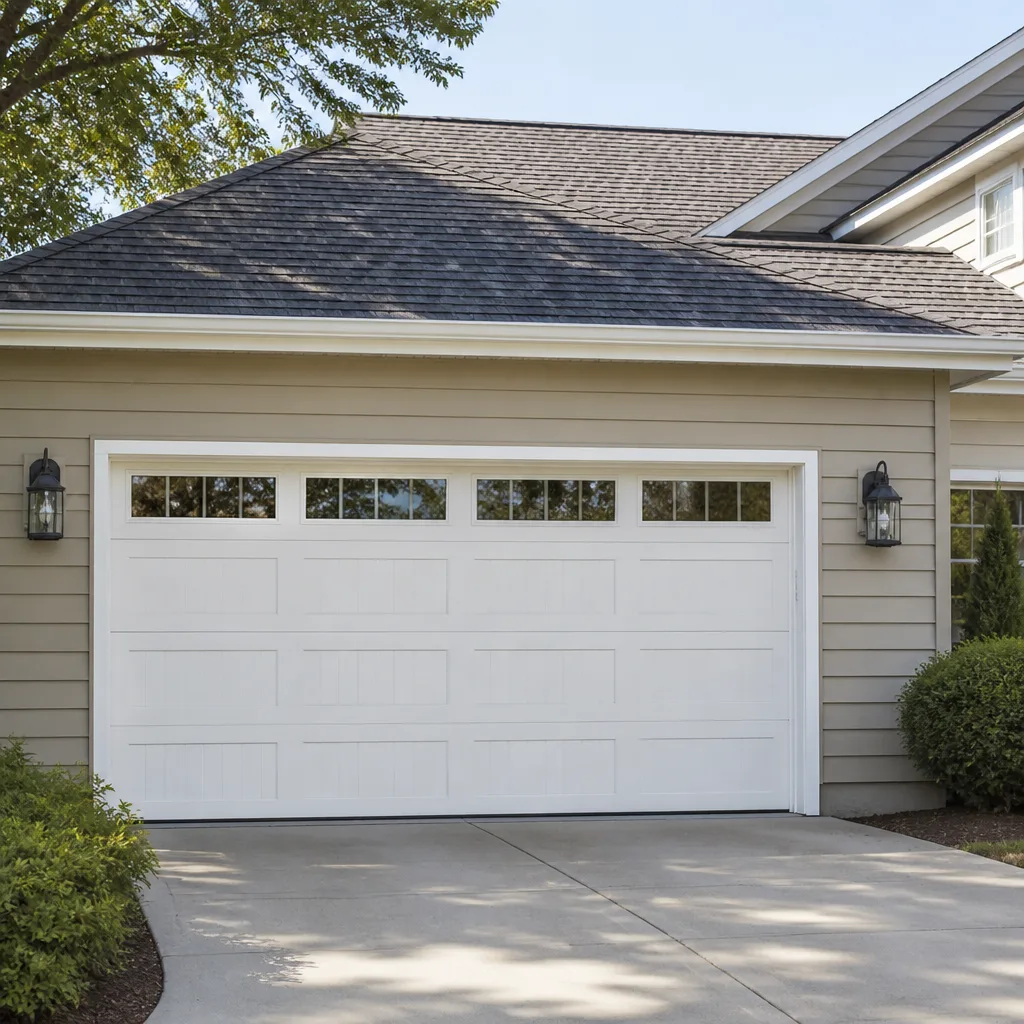 LiftMaster openers
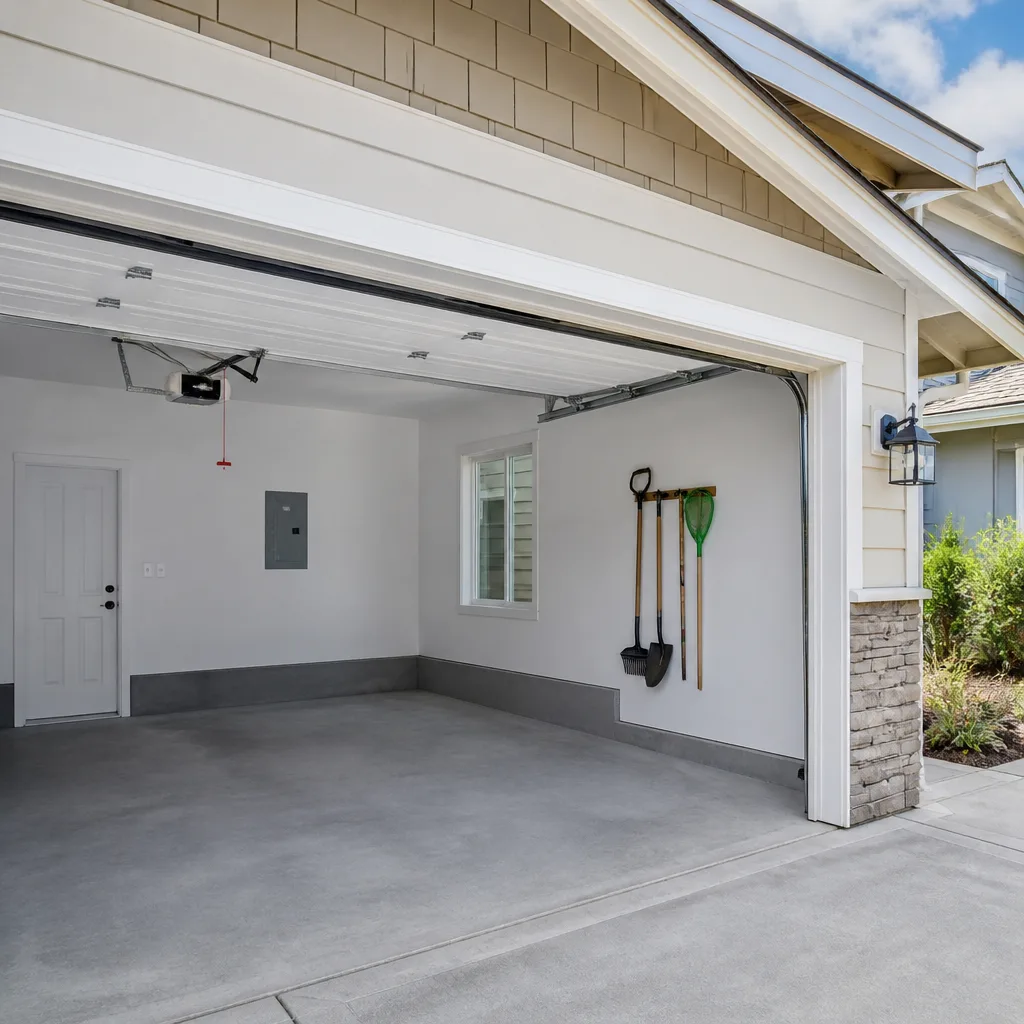 Chamberlain openers
Full 25-point door and opener safety check with every visit - springs, cables, rollers, tracks, and your LiftMaster or Chamberlain opener included
You get a price before we start. It does not change when the pro arrives.
Get your free estimateGarage Door Emergency Preparedness Guide for St. Charles Homes
Most garage door emergencies aren’t really emergencies. They’re surprises. The door that won’t close, the spring that snaps, the opener that quits with the car parked inside – homeowners who’ve thought through those scenarios in advance get through them in about twenty minutes. Homeowners who haven’t are stuck for hours, sometimes with a door hanging open to the street overnight.
St. Charles weather makes this more than a thought experiment. Frozen bottom seals, wind-bent panels, ice that welds a door to its concrete – these are ordinary winter events here, not freak occurrences. This guide walks through what to do before, during, and right after a garage door failure in St. Charles, from manual release to temporary securing to the exact information a repair line needs.
Quick Answer
If your garage door fails in St. Charles, the safest first move is to stop operating it – don’t force the opener, don’t tug the door – then check whether the trouble is a power outage, a disengaged opener, or a broken spring. For a spring or cable failure, keep everyone clear of the door and call a professional. For a door that won’t close on a cold morning, check the bottom seal for ice before anything else.
Styles & brands we work with
- Raised-panel steel
- Carriage house
- Modern flush
- Full-view glass
- LiftMaster openers
- Chamberlain openers
Table of Contents
- How to manually release your garage door opener
- St. Charles weather emergencies: frozen seals, wind damage, ice
- What to do during a power outage
- When a spring snaps with your car inside
- How to temporarily secure a door that won’t close
- What to have ready when you call
- Common mistakes to avoid
- Frequently asked questions
How to Manually Release Your Garage Door Opener
Every residential opener has a manual release, usually a red cord or handle hanging from the trolley that runs along the rail. Pulling it disconnects the door from the opener so you can lift the door by hand. That’s the theory. The reality depends entirely on whether the door’s springs are intact when you pull.
Here’s the sequence we walk homeowners through:
- Check the door’s weight first. With the opener still engaged, look at the door’s position. If the door is fully closed and the springs look intact (no visible gap in a torsion spring above the door, no dangling extension spring on the side), you can proceed. If a spring is visibly broken, stop here.
- Pull the release cord straight down and toward the back of the garage – that’s toward the motor unit, not toward the door. Pulling at an angle toward the door can bind the trolley.
- Lift the door slowly by hand, using the handle or a bottom section edge. A door with working springs should lift with one hand and stay where you leave it. If it feels heavy or slams down, the springs are compromised – lower it carefully and call a professional.
- To re-engage, lift the door fully, then pull the release cord again or run the opener until the trolley reconnects. Most openers re-engage automatically as the carriage passes the trolley.
One warning about the red cord: if the door is under spring tension – meaning a spring is broken and the door’s weight is now hanging on the opener and cables – pulling the release can drop the door fast. High-tension springs and cables are the most dangerous parts of any garage door system, and a door that drops can cause serious injury. If you’re unsure of the door’s condition, don’t pull anything. Call a professional for garage door spring repair and let them assess it safely.
St. Charles Weather Emergencies: Frozen Seals, Wind Damage, Ice
St. Charles sits in a climate with real winters and real summer storms, and both create their own garage door failure patterns. During cold snaps, the most common call we hear about is a door that opens fine but won’t close all the way – or reverses the moment it touches the floor. Nine times out of ten, the bottom rubber seal has frozen to the concrete apron.
What’s happening: moisture collects under the seal, freezes overnight, and bonds the rubber to the slab. The opener’s safety reverse feature senses resistance and sends the door back up. Homeowners assume the opener is broken. It isn’t. Gently breaking the ice bond with a plastic scraper or warm (not boiling) water along the seal usually solves it. Then dry the seal and the concrete so it doesn’t refreeze that night.
Wind events bring a different set of problems to St. Charles homes:
- Bent or creased panels from wind-driven debris. A dented panel can bind against its neighbor and throw the door off track.
- Doors blown off track when a gust catches a partially open door. If the door is off its track, don’t run the opener – the motor will fight the jam and damage the trolley or the door itself.
- Loose hinges and roller brackets that rattle after a storm and gradually work themselves out of alignment.
- Water intrusion under a worn threshold seal after heavy rain, which softens the wood framing around the opening over time.
A door that’s been through a storm deserves a visual check: look down each track for bends, check that all rollers sit inside the track, and watch the door travel up and down once at slow speed. If it shudders, squeals, or drifts sideways, that’s a garage door repair issue worth handling before it becomes a stuck-door issue. And if your home has a Raynor or Wayne Dalton door, both hold up well to Midwest weather but their track and hinge hardware still needs that post-storm inspection.
What to Do During a Power Outage
A dead opener during an outage isn’t a broken opener. It’s just an opener without electricity. The manual release is your tool here, and the procedure is the same as above: pull the red cord toward the motor, lift the door by hand, and drive out or in. Since a door with healthy springs is balanced, you shouldn’t need much force. If it takes two hands and a grunt, stop – something’s wrong beyond the power.
When the power comes back, most openers re-engage automatically the next time the door is cycled. If yours doesn’t, run the opener once and check whether the carriage has picked up the trolley. Some units need the door lifted to the fully open position before the trolley will reconnect.
A few things worth knowing before an outage hits in St. Charles:
- Test your manual release once a year, in decent weather, so you know how it feels when it works. Fumbling with a stuck cord in the dark with the car inside is a worse experience.
- Keep a flashlight or a battery lantern on a hook near the garage door. It’s a small prep that pays off.
- If your opener has a battery backup (many current LiftMaster and Chamberlain models do), test it periodically by cutting power at the breaker for a minute and running the door.
- Never leave a manually released door open and unattended if you can avoid it. A door disconnected from the opener can be lifted from outside.
If the power is on and the door still won’t respond – the light comes on but nothing moves, or the opener hums without traveling – that’s an opener problem, not a power problem. Our team handles garage door opener repair across LiftMaster, Chamberlain, Genie, and Craftsman units, which covers most of the residential openers we see in St. Charles.
When a Spring Snaps With Your Car Inside
This is the scenario that rattles people most, and it’s worth rehearsing mentally. You’re inside the garage, the door is down, and you hear a bang like a gunshot – that’s a torsion spring breaking. The door is now dead weight, held up only by the opener and cables. What you do in the next five minutes matters.
- Don’t touch the door, the cables, or the red cord. With a spring broken, the door’s full weight – often a few hundred pounds – rests on the opener’s trolley and the lift cables. Pulling the release can drop the door instantly.
- Get out of the garage through the house door. The car can wait.
- Keep the garage door closed and don’t run the opener. Running it may force the door down unevenly or snap a cable, which is far more dangerous than the spring failure itself.
- Call for spring repair. A trained technician will secure the door with winding bars and proper clamps before touching anything. Torsion springs are under extreme tension, and this is not a repair to attempt yourself – cable and spring failures cause serious injuries when handled by untrained hands.
The same logic applies if you’re outside and the door won’t open – your car is trapped inside, and the door is dead weight. Resist the urge to muscle it up. If the door must be opened before a technician arrives (a medical emergency, for example), pull the release only if you can first confirm the springs are intact and can support the door’s weight.
Homeowners often ask whether both springs should be replaced when one fails. On a two-spring door, yes – the springs were wound the same day and have cycled the same number of times, so the surviving spring is close behind. Replacing one and leaving the other is a short-lived fix.
How to Temporarily Secure a Door That Won’t Close
A garage door stuck open is a security problem, a weather problem, and a pest problem all at once. If you can’t get it closed – a broken spring, a bent track, a dead opener – your goal for the next few hours is to make the opening not look open. It’s a temporary measure, not a repair.
What actually works:
- Lower the door as far as it will safely go by hand (only if the springs are intact and the door feels balanced) and block the gap at the bottom with something solid and visible.
- Padlock the tracks. C-clamps or locking pliers clamped onto the vertical track just above a roller will stop the door from being lifted from outside. This is one of the simplest temporary security measures.
- Back the car up to the opening if the door is a single-car width, or park across the driveway. Crude, but effective at deterring casual opportunists.
- Cover a large opening with a heavy tarp or plywood sheet if bad weather is coming, and weigh or screw it in place so it doesn’t blow loose.
- Get it repaired before nightfall if you can. The faster a door is back on its track or the spring is replaced, the shorter your window of vulnerability.
What doesn’t work: propping a door with a broomstick, taping a door closed, or trusting a door’s weight alone to keep it down. None of those hold up to a determined push. If the door is stuck open and you need help, we take emergency garage door calls in St. Charles. We answer 24/7. Fast dispatch from 7am to 7pm, Sunday through Friday.
What to Have Ready When You Call
Here’s the part most homeowners don’t think about: what information actually speeds up an emergency repair. The difference between a technician arriving with the right parts and one arriving to diagnose and then order is usually the accuracy of the details the homeowner provides on the phone.
Have these ready before you dial:
- The door brand and rough age. Clopay, Amarr, Wayne Dalton, and Raynor are common around St. Charles, and knowing the brand lets a technician anticipate the kind of hardware and panel construction they’ll find.
- The opener brand and model if the problem involves the opener. The brand name is usually printed on the motor housing. LiftMaster, Chamberlain, Genie, and Craftsman are the big four, and knowing which you have narrows down diagnostics fast.
- What’s actually happening. It won’t open. It won’t close. It opens halfway and reverses. It makes a loud bang. It hums but doesn’t move. Be specific – “it’s broken” tells a technician nothing.
- Whether the door is open, closed, or stuck halfway. This determines urgency and what the technician prepares for.
- Whether there’s a car inside, and whether you need access. If your car is trapped, that changes the priority.
- The spring type if you can see it safely. Torsion springs are mounted on a horizontal shaft above the door. Extension springs run along the horizontal tracks. Don’t touch either to check.
- Your address and the door’s width. Single-car and double-car doors use different springs and hardware, and we want to arrive with the right one.
If you don’t know the brand or the model, that’s fine – we’ll figure it out on-site. The other details are the ones that save time. Our technicians have up to 14 years of experience across the brands we service, and we’re set up for the same-day service most St. Charles calls need.
See the difference
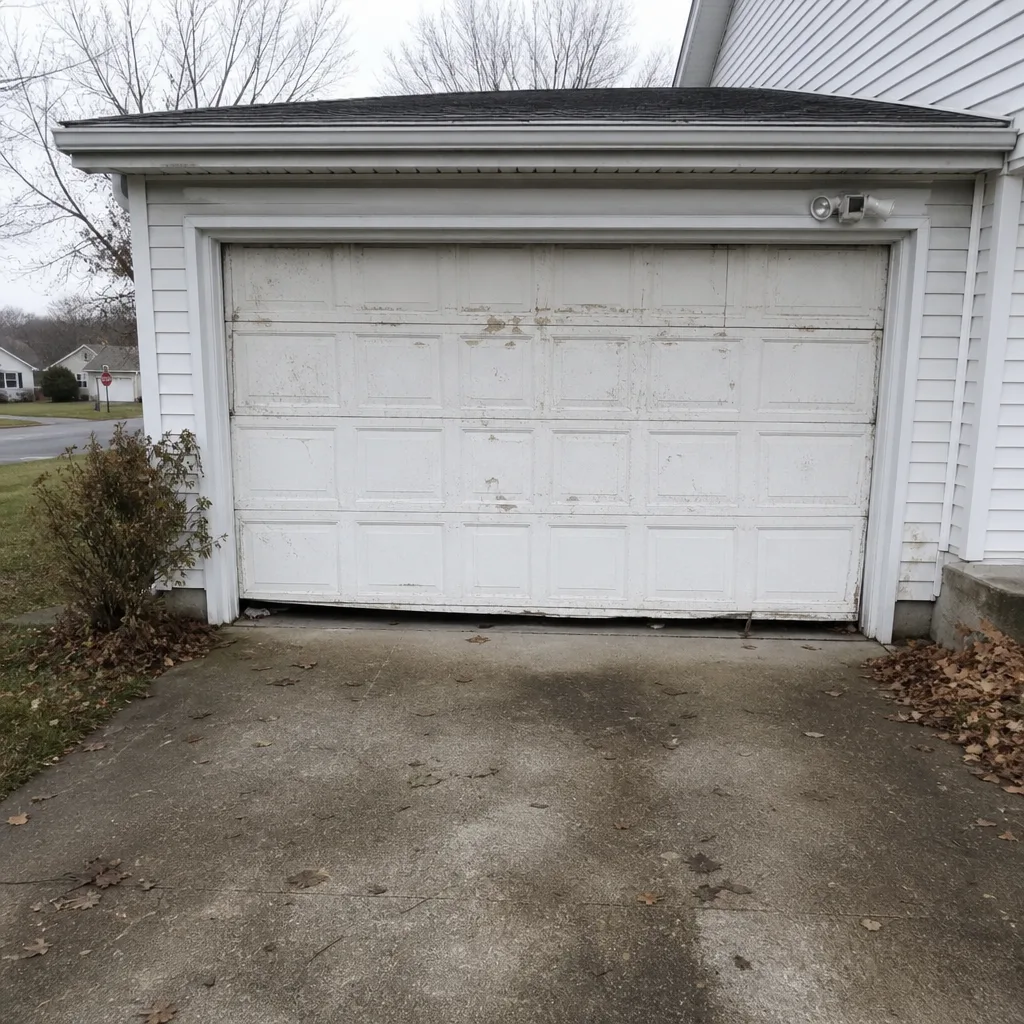 Before
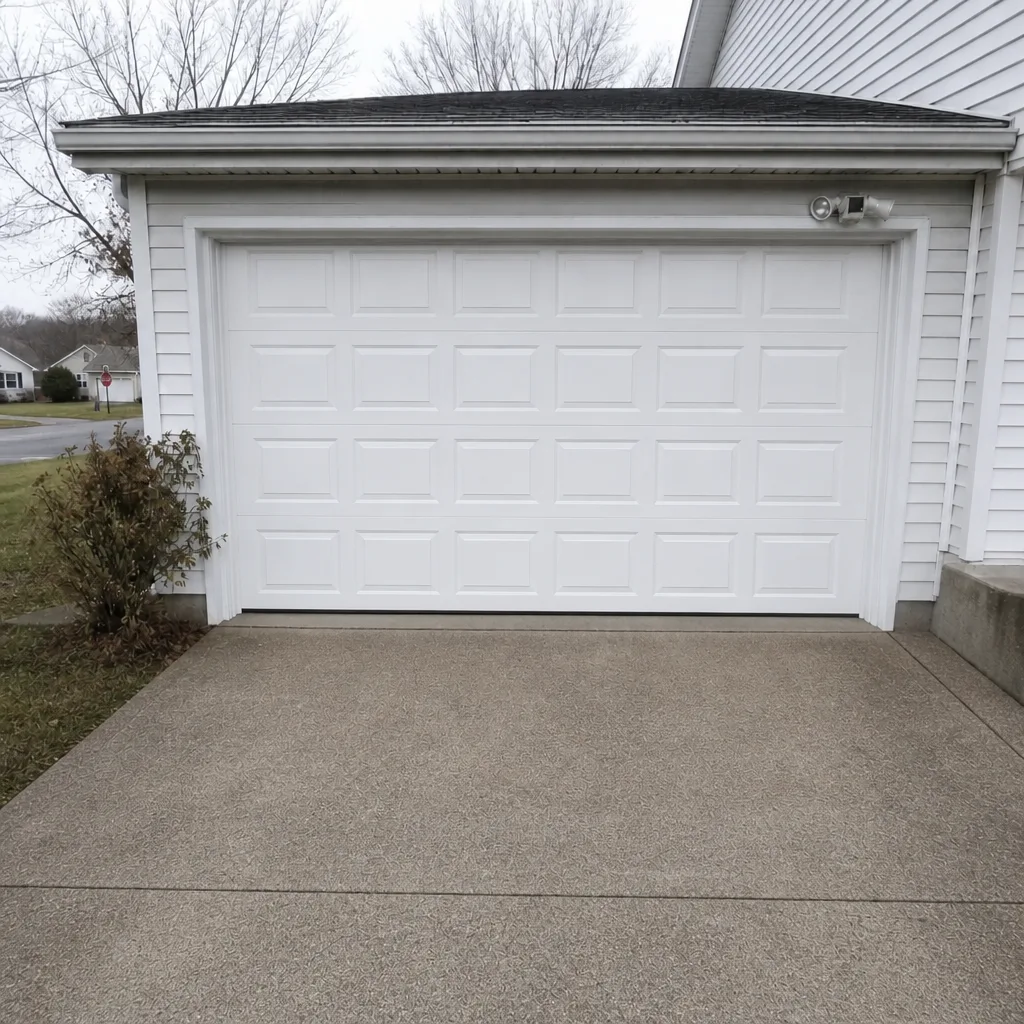 After
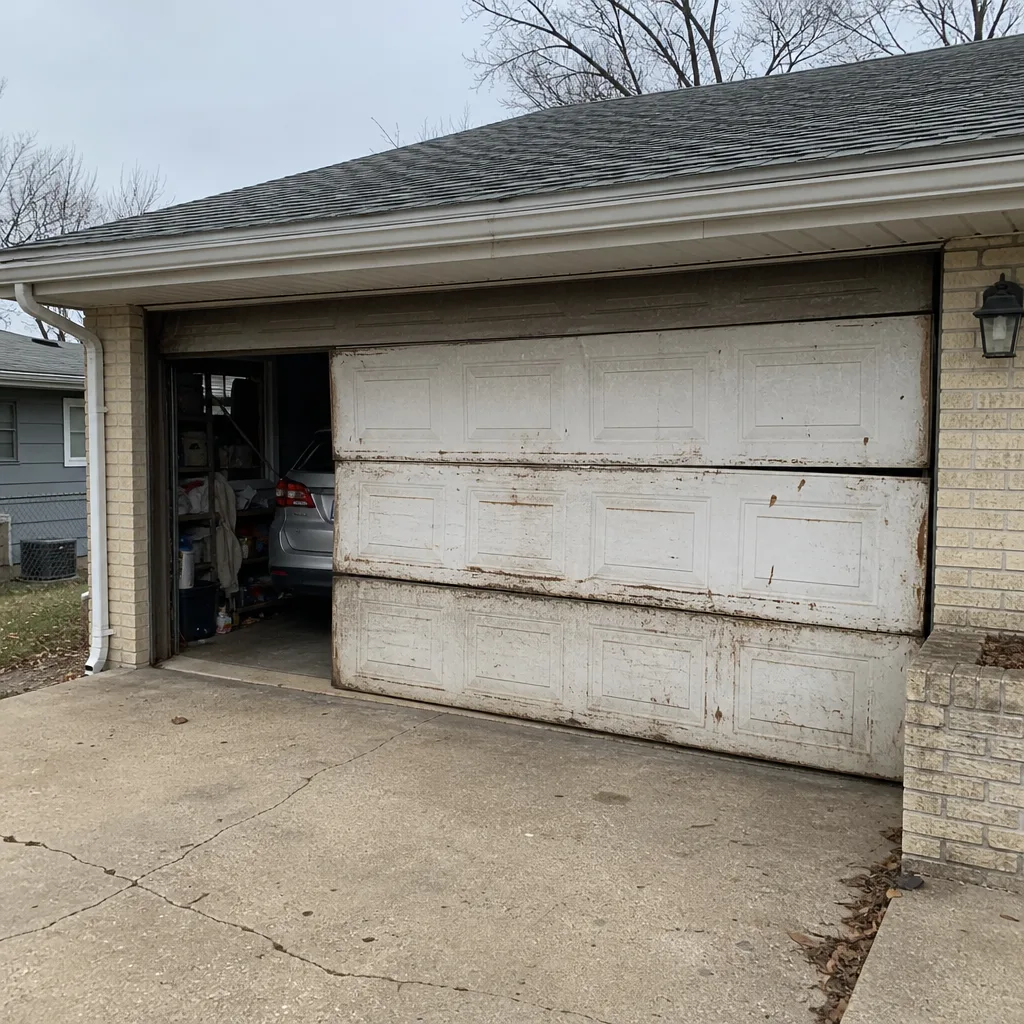 Before
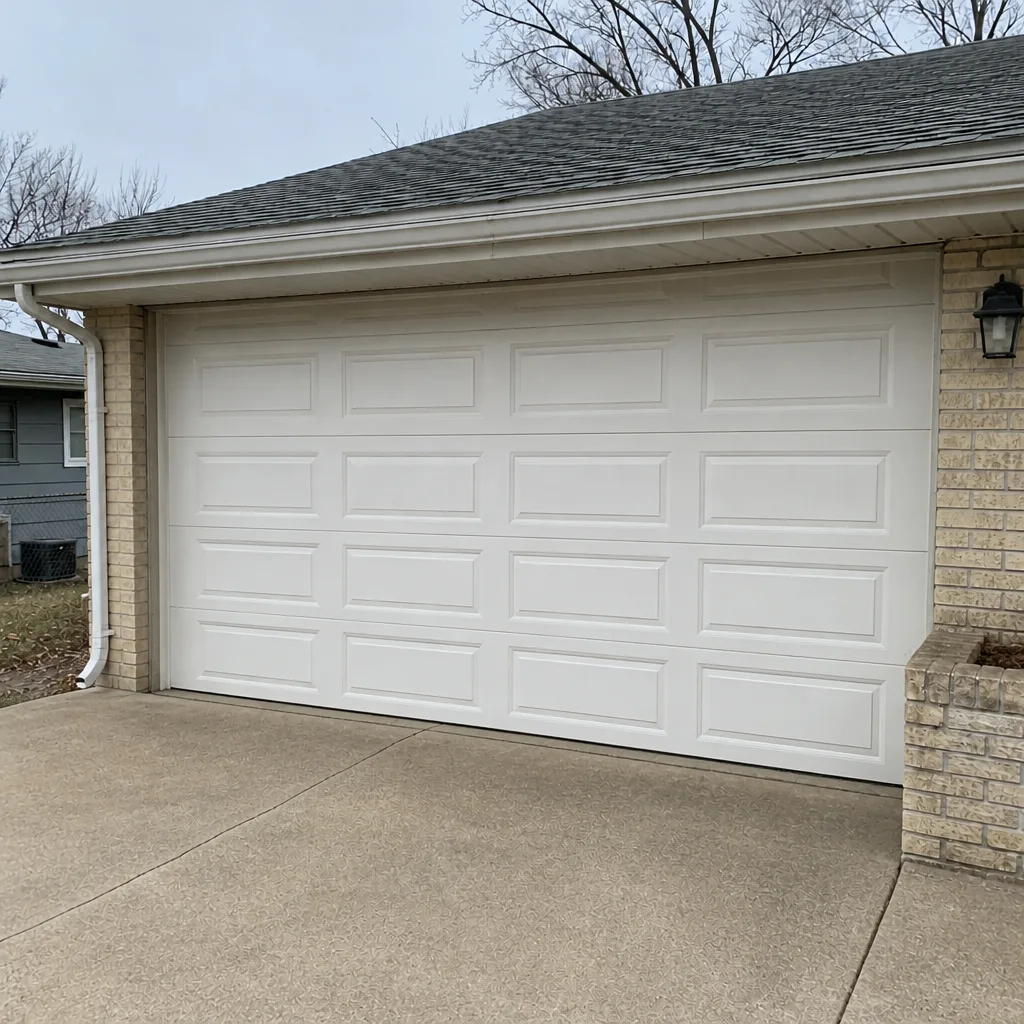 After
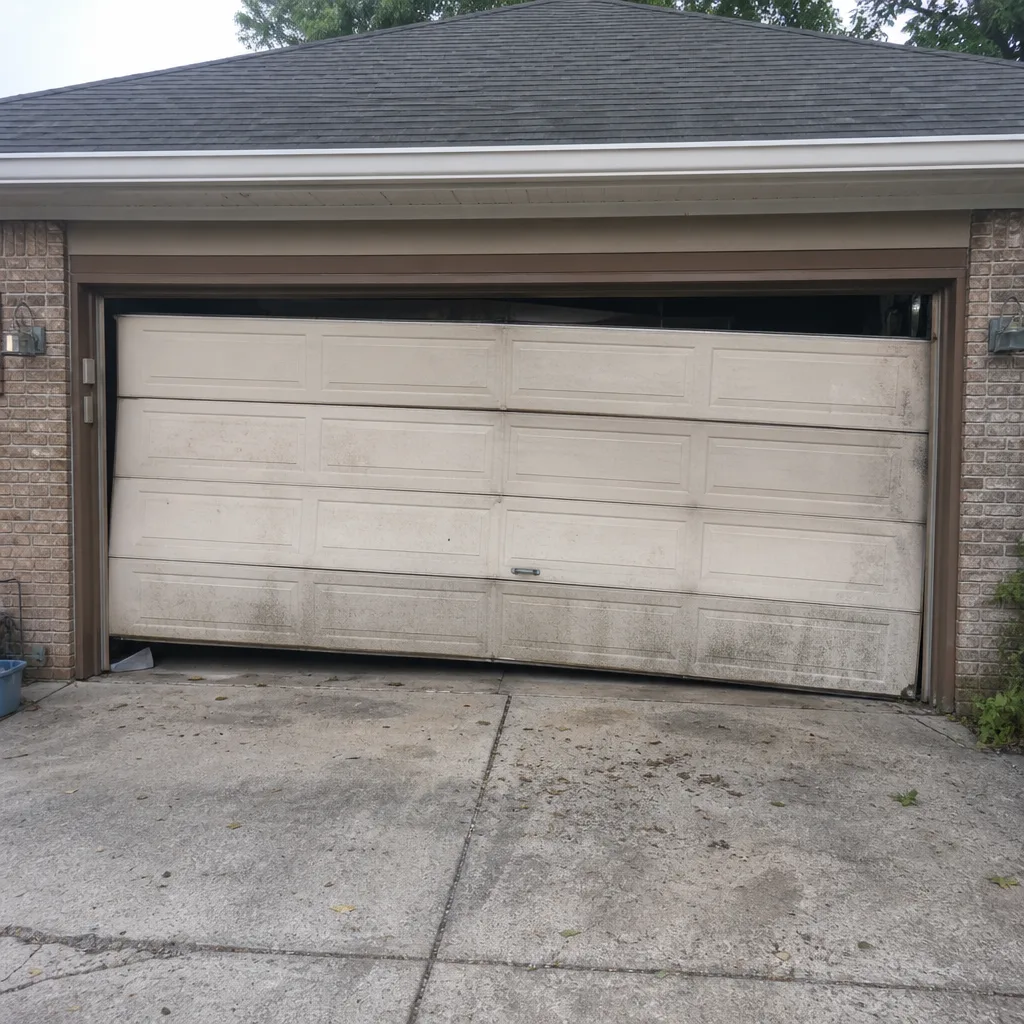 Before
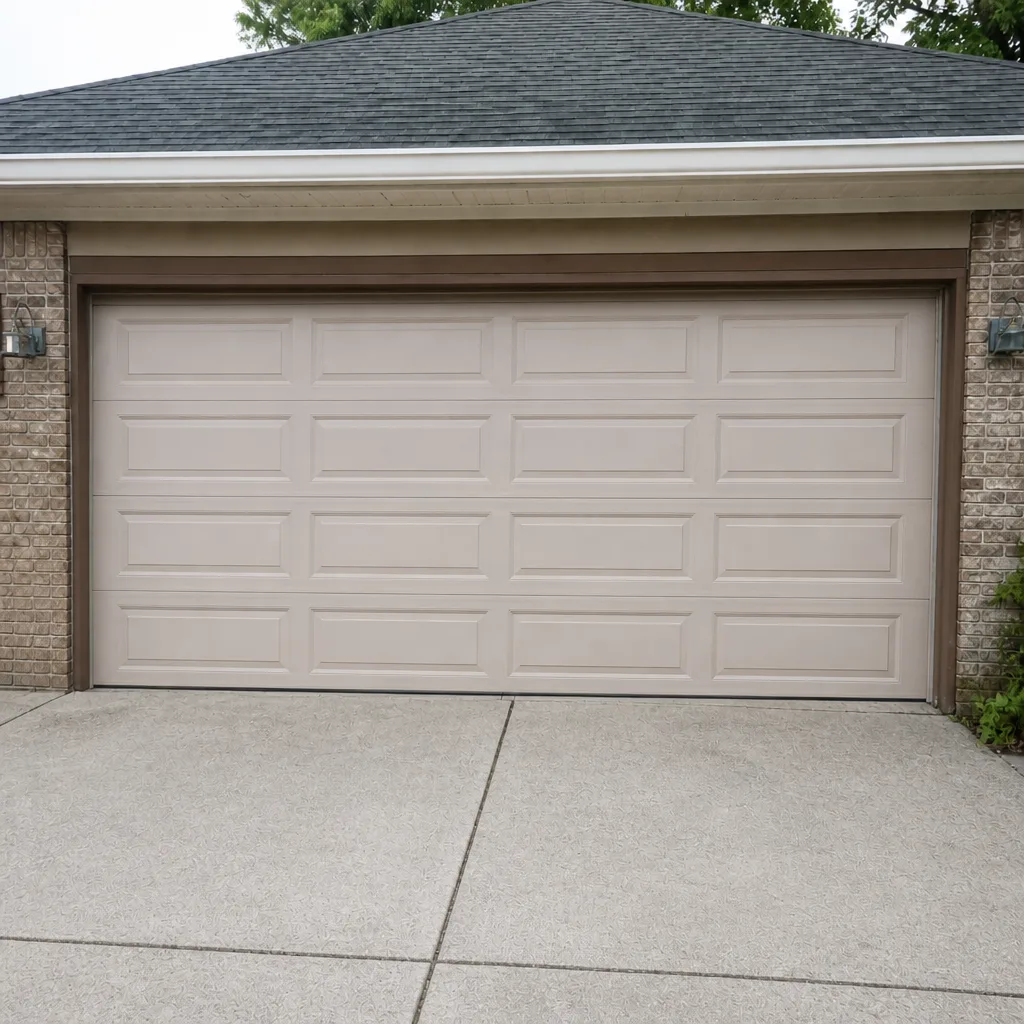 After
Common Mistakes to Avoid
- Muscling a dead door up by hand. If a spring is broken, the door’s weight rests on the opener and cables, and lifting it can snap a cable or drop the door. Call for spring repair instead.
- Running the opener repeatedly to “see if it works this time.” A door that reverses or binds on each try is telling you something is misaligned or a spring has slipped. Each cycle adds stress to the trolley, hinges, and opener gear.
- Assuming a door that won’t close is an opener problem. In St. Charles winters, the bottom seal freezing to the slab is the more likely culprit. Check the seal and the concrete before calling.
- Ignoring a bent track after a storm. A small bend in the track gets bigger every time the door cycles. Catch it early and it’s a quick adjustment; wait and it becomes a roller replacement or a full track repair.
- Letting a door sit stuck open overnight. An open garage door in a St. Charles neighborhood invites the wrong kind of attention. Secure it with track locks or a parked car and get it fixed.
- Replacing one spring when both are worn. Springs wound together fail close together. Doing one and not the other means a second repair call in short order.
- Forgetting to test the manual release until you need it. A release cord that’s rusted or a trolley that binds will fail you when the power’s out and you’re late. Test it once a year in good weather.
When to Call a Professional
Some garage door issues are DIY-friendly: a photo-eye sensor knocked out of alignment, a remote that needs a new battery, a bottom seal that needs cleaning. Others are not, and calling a professional isn’t an overreaction – it’s the right call. Spring and cable work involves high-tension components that can cause serious injury. Off-track doors, bent panels, opener boards that fail, and anything involving the door’s structural balance are all jobs for a trained technician with the right tools and the right safety gear.
St. Charles Garage Door Repair Co offers free estimates in St. Charles – call (877) 473-4275. We answer 24/7, and emergency garage door service is a real offering, not a marketing line. Our technicians have up to 14 years of experience, and we work on the actual system installed in your home rather than a generic stand-in.
Frequently Asked Questions
Typical spring repair in the St. Charles area runs roughly $180 to $340 for a single spring, and since springs are usually replaced in matched pairs, a pair costs about twice that. The written estimate you receive sets the final price, and it’s quoted and agreed before any work starts. Call (877) 473-4275 for an exact quote – estimates are free.
Yes – emergency garage door service is an active offering, and same-day service is available for most calls in St. Charles. We answer 24/7; a call outside dispatch hours is booked into the next opening, Sunday through Friday, 7am to 7pm. Call (877) 473-4275 and we’ll get a technician scheduled.
No – the written estimate you agree to before work begins is the price. If a technician finds something different from what was described on the phone, they’ll tell you before doing anything and you’ll get an updated estimate to approve. Nothing is added after the fact. Call (877) 473-4275 to book a free estimate.
Yes – the local professionals we connect you with are licensed and insured as their state requires. We can tell you who’s coming and what to expect before they arrive. Call (877) 473-4275 with any questions.
Pull the red manual release cord straight down and toward the motor unit, then lift the door slowly by hand. Only do this if the springs are intact and the door feels balanced – a door with a broken spring is under tension and can drop when the release is pulled. If it feels heavy or slams down, stop and call a professional.
Check the bottom rubber seal for ice bonded to the concrete first – that’s the most common cause of a door that reverses in cold St. Charles weather. Break the ice gently with a plastic scraper or warm water, dry both surfaces, and try again. If the door still won’t close, or a spring looks broken, call (877) 473-4275 for a same-day repair.
The Bottom Line
Garage door emergencies are mostly preparation problems. Know where your manual release is and how it feels when the door is healthy. Check the bottom seal first in freezing weather. Never force a door with a broken spring, and never pull the release under tension. Keep your door and opener brand information somewhere handy so a repair call starts with real details. And if something fails that you can’t safely manage, call. At St. Charles Garage Door Repair Co, we answer 24/7 and dispatch technicians with fast dispatch from 7am to 7pm, Sunday through Friday, so a bad morning doesn’t turn into a bad day.
Call (877) 473-4275 for a free estimate. Our team works across LiftMaster, Chamberlain, Genie, Clopay, Amarr, Wayne Dalton, Craftsman, and Raynor systems, and we’re here for the repair, the emergency, and the eventual replacement – whether it’s a $30 sensor cable or a full new door.
Written by the team at St. Charles Garage Door Repair Co.